Before and after
The same equations, as a screen reader user would meet them in the PDF and in the HTML.
How to read this page
- The readings are made by the tool's own speech rules. They are not recordings of NVDA, JAWS or VoiceOver, and real screen readers differ from one another.
- “Before” is the PDF's own text layer, read one character at a time. These PDFs are untagged print-outs of OpenStax web pages. A PDF with tags, or one with alt text on its equations, would give a different “before”.
- The equations were chosen to show different kinds of math. They were not picked at random. They show what the HTML can do, not how often it gets an equation right. For that, see the numbers on the home page.
- The “after” is the tool's proposal. Where a proposal is wrong, a person is meant to catch it on the review screen. Each equation links to its example.
Physics 2.3, position vs. time graphs
Page 3, equation 1
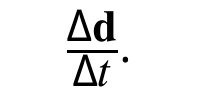
Before: the PDF's text layer
The PDF holds this text
Δ𝐝 Δ𝑡.
Read aloud roughly as
“cap delta bold d cap delta t”
After: the HTML
The equation as MathML
Read aloud roughly as
“cap delta bold d over cap delta t”
What differs
- The HTML marks a fraction, so a listener hears where it starts and ends. The PDF's text runs the top and the bottom together.
Page 4, equation 2

Before: the PDF's text layer
The PDF holds this text
𝐝= 𝐝0 + 𝐯𝑡.
Read aloud roughly as
“bold d equals bold d 0 plus bold v t”
After: the HTML
The equation as MathML
Read aloud roughly as
“bold d equals bold d sub 0 end sub plus bold v t”
What differs
- Subscripts are marked as subscripts in the HTML.
Page 8, equation 3
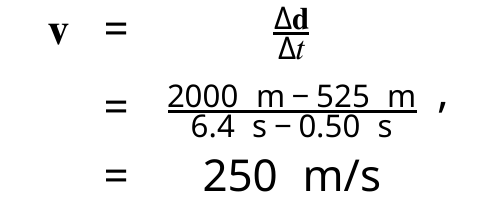
Before: the PDF's text layer
The PDF holds this text
Δ𝐝 𝐯= Δ𝑡 = 2000 m −525 m , 6.4 s −0.50 s = 250 m/s
Read aloud roughly as
“cap delta bold d bold v equals cap delta t equals 2000 m minus 525 m comma 6 period 4 s minus 0 period 50 s equals 250 m divided by s”
After: the HTML
The equation as MathML
Read aloud roughly as
“row 1: bold v equals cap delta bold d over cap delta t; row 2: equals the fraction 2000 meters minus 525 meters over 6.4 seconds minus 0.50 seconds end fraction comma; row 3: equals 250 meters per second”
What differs
- The HTML marks a fraction, so a listener hears where it starts and ends. The PDF's text runs the top and the bottom together.
- A multi-line working is read line by line in the HTML.
Page 10, equation 4
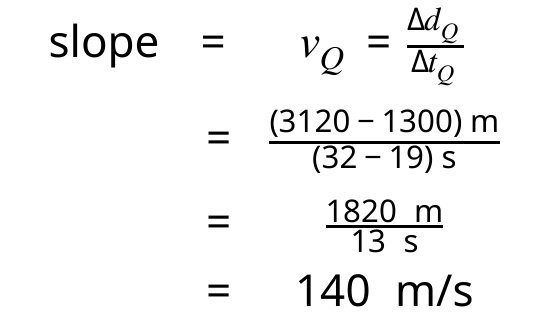
Before: the PDF's text layer
The PDF holds this text
slope = 𝑣𝑄=Δ𝑑𝑄Δ𝑡𝑄 (3120 −1300) m = (32 −19) s = 1820 m 13 s = 140 m/s
Read aloud roughly as
“s l o p e equals v cap Q equals cap delta d cap Q cap delta t cap Q open parenthesis 3120 minus 1300 close parenthesis m equals open parenthesis 32 minus 19 close parenthesis s equals 1820 m 13 s equals 140 m divided by s”
After: the HTML
The equation as MathML
Read aloud roughly as
“row 1: slope equals v sub cap Q equals the fraction cap delta d sub cap Q end sub over cap delta t sub cap Q end sub end fraction; row 2: equals the fraction open parenthesis 3120 minus 1300 close parenthesis m over open parenthesis 32 minus 19 close parenthesis s end fraction; row 3: equals 1820 meters over 13 seconds; row 4: equals 140 meters per second”
What differs
- The PDF's text is read letter by letter in places (“s l o p e”). In the HTML a word stays a word.
- The HTML marks a fraction, so a listener hears where it starts and ends. The PDF's text runs the top and the bottom together.
- Subscripts are marked as subscripts in the HTML.
- A multi-line working is read line by line in the HTML.
Physics 2.2, speed and velocity
Page 2, equation 1
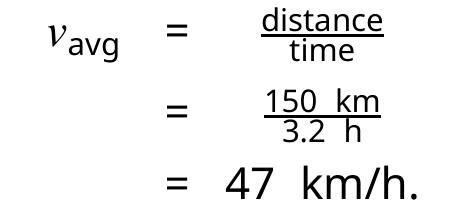
Before: the PDF's text layer
The PDF holds this text
distance 𝑣avg = time = 150 km 3.2 h = 47 km/h.
Read aloud roughly as
“d i s t a n c e v a v g equals t i m e equals 150 k m 3 period 2 h equals 47 k m divided by h”
After: the HTML
The equation as MathML
Read aloud roughly as
“row 1: v sub avg equals distance over time; row 2: equals 150 kilometers over 3.2 hours; row 3: equals 47 kilometers per hour”
What differs
- The PDF's text is read letter by letter in places (“d i s t a n c e v a v g”). In the HTML a word stays a word.
- The HTML marks a fraction, so a listener hears where it starts and ends. The PDF's text runs the top and the bottom together.
- Subscripts are marked as subscripts in the HTML.
- A multi-line working is read line by line in the HTML.
Page 5, equation 2

Before: the PDF's text layer
The PDF holds this text
𝐯𝐚𝐯𝐠= displacement = 𝛥𝐝 time 𝛥𝑡= 𝐝f −𝐝0 𝑡f −𝑡0
Read aloud roughly as
“bold v bold a bold v bold g equals d i s p l a c e m e n t equals cap delta bold d t i m e cap delta t equals bold d f minus bold d 0 t f minus t 0”
After: the HTML
The equation as MathML
Read aloud roughly as
“bold v sub bold a bold v bold g end sub equals displacement over time equals cap delta bold d over cap delta t equals the fraction bold d sub f end sub minus bold d sub 0 end sub over t sub f end sub minus t sub 0 end sub end fraction”
What differs
- The PDF's text is read letter by letter in places (“d i s p l a c e m e n t”). In the HTML a word stays a word.
- The HTML marks a fraction, so a listener hears where it starts and ends. The PDF's text runs the top and the bottom together.
- Subscripts are marked as subscripts in the HTML.
Page 10, equation 3
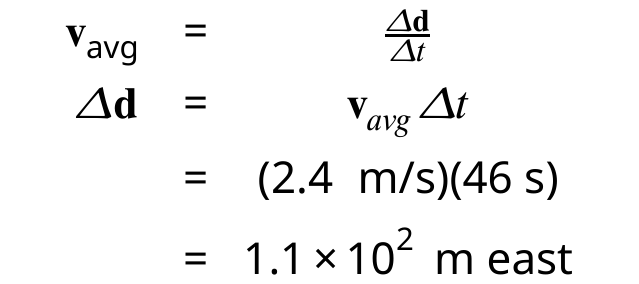
Before: the PDF's text layer
The PDF holds this text
𝛥𝐝 𝐯avg = 𝛥𝑡 𝛥𝐝 = 𝐯𝑎𝑣𝑔𝛥𝑡 = (2.4 m/s)(46 s) = 1.1 × 10² m east
Read aloud roughly as
“cap delta bold d bold v a v g equals cap delta t cap delta bold d equals bold v a v g cap delta t equals open parenthesis 2 period 4 m divided by s close parenthesis open parenthesis 46 s close parenthesis equals 1 period 1 times 102 m e a s t”
After: the HTML
The equation as MathML
Read aloud roughly as
“row 1: bold v sub avg equals cap delta bold d over cap delta t; row 2: cap delta bold d equals bold v sub a v g end sub cap delta t; row 3: equals open parenthesis 2.4 meters per second close parenthesis open parenthesis 46 seconds close parenthesis; row 4: equals 1.1 times 10 squared m east”
What differs
- The PDF's text is read letter by letter in places (“v a v g”). In the HTML a word stays a word.
- The HTML marks a fraction, so a listener hears where it starts and ends. The PDF's text runs the top and the bottom together.
- Subscripts are marked as subscripts in the HTML.
- A multi-line working is read line by line in the HTML.
Physics 2.1, relative motion, distance and displacement
Page 11, equation 1

Before: the PDF's text layer
The PDF holds this text
Δ𝐝= 0
Read aloud roughly as
“cap delta bold d equals 0”
After: the HTML
The equation as MathML
Read aloud roughly as
“cap delta bold d equals 0”
Page 12, equation 2

Before: the PDF's text layer
The PDF holds this text
Δ𝐝= 𝐝f −𝐝0 = −1 km
Read aloud roughly as
“cap delta bold d equals bold d f minus bold d 0 equals minus 1 k m”
After: the HTML
The equation as MathML
Read aloud roughly as
“cap delta bold d equals bold d sub f end sub minus bold d sub 0 equals minus 1 kilometer”
What differs
- Subscripts are marked as subscripts in the HTML.
Lecture notes fixture
Page 1, equation 1
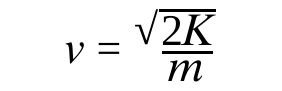
Before: the PDF's text layer
The PDF holds this text
𝑣= √2𝐾 𝑚
Read aloud roughly as
“v equals square root 2 cap K m”
After: the HTML
The equation as MathML
Read aloud roughly as
“v equals the square root of 2 cap K over m end root”
What differs
- The HTML marks a fraction, so a listener hears where it starts and ends. The PDF's text runs the top and the bottom together.
Page 1, equation 2

Before: the PDF's text layer
The PDF holds this text
𝛥𝑥= 𝑥𝑓−𝑥0
Read aloud roughly as
“cap delta x equals x f minus x 0”
After: the HTML
The equation as MathML
Read aloud roughly as
“cap delta x equals x sub f end sub minus x sub 0”
What differs
- Subscripts are marked as subscripts in the HTML.
Page 2, equation 3
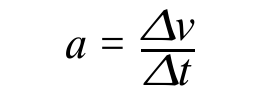
Before: the PDF's text layer
The PDF holds this text
𝑎= 𝛥𝑣 𝛥𝑡
Read aloud roughly as
“a equals cap delta v cap delta t”
After: the HTML
The equation as MathML
Read aloud roughly as
“a equals cap delta v over cap delta t”
What differs
- The HTML marks a fraction, so a listener hears where it starts and ends. The PDF's text runs the top and the bottom together.